 Semiahmoo
 Wiser Lake's Climate Is Harder on Siding Than It Looks
Homes around Wiser Lake sit a little further inland than our jobs right on the Semiahmoo waterfront, but they answer to the same weather system. Whatcom County winters here are long, wet, and grey, with driving rain that comes in sideways off storms moving through the Salish Sea corridor. Even without direct salt spray, the air stays damp for months at a stretch, and that moisture load is exactly what breaks down the wrong siding material over time.
The clearest sign of that climate at work is moss. Roofs, fences, decks, and siding around Wiser Lake all deal with a moss and mildew season that can run more than half the year in shaded, tree-lined yards. Moss holds water against a surface long after the rain stops, and that constant low-grade moisture is what causes paint to fail early, wood trim to soften, and seams on lesser siding products to swell or separate. It's a slow problem, which is exactly why it gets ignored until a full section of wall needs replacing instead of a simple repaint.
None of this means Wiser Lake is an extreme environment — it isn't. But it's a persistently damp one, and persistent damp is a tougher long-term test for exterior materials than the occasional hard storm. Siding here needs to shed water reliably, resist swelling and rot at the seams, and hold a factory finish through repeated wet-dry cycles year after year.
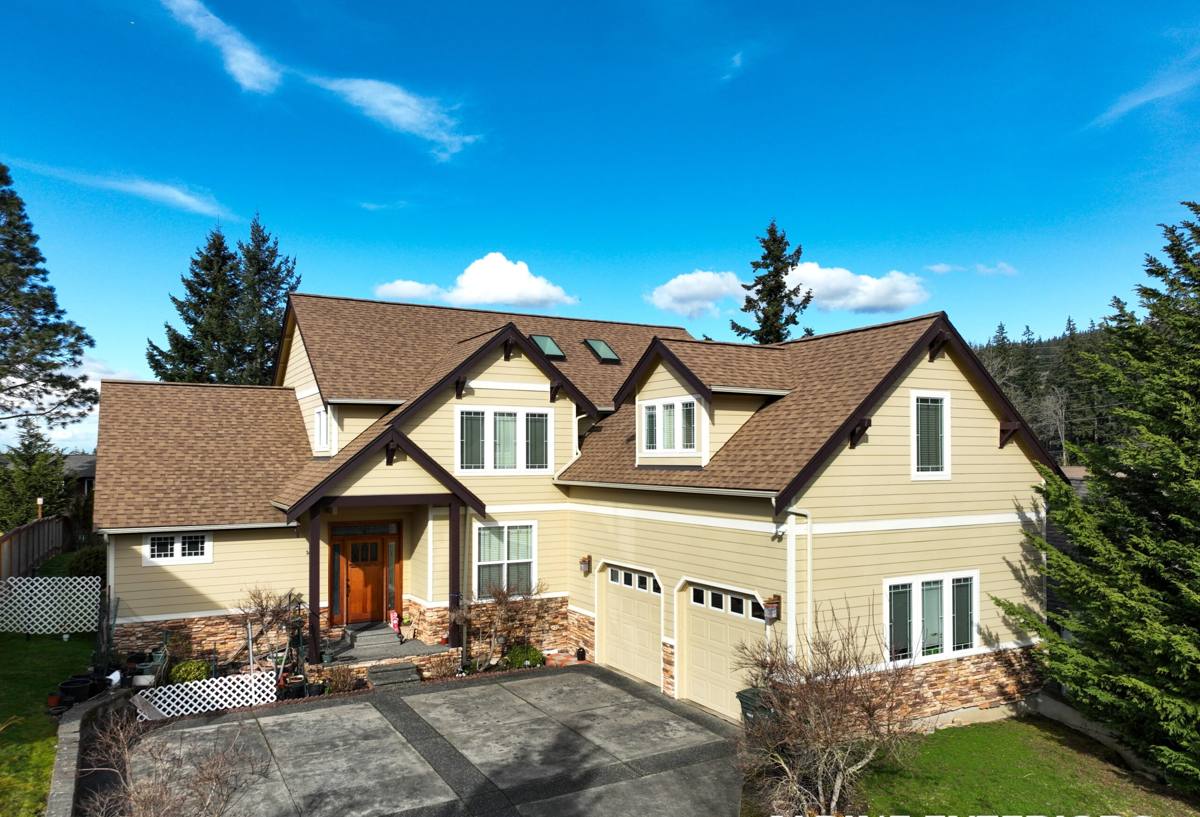
Why We Only Install James Hardie Here
We standardized on James Hardie fiber cement siding for every job we take on in this part of Whatcom County, including Wiser Lake, and we don't install vinyl, LP SmartSide, Cemplank, Allura, primed spruce, or cedar as an alternative. That's not a marketing line — it's a decision we made after weighing how each of those products actually performs under years of Pacific Northwest moisture, not just how they look on install day.
Fiber cement is made from cement, sand, and cellulose fibers, and it doesn't absorb and swell the way wood-based products can when they stay wet for extended periods. It won't warp in the heat, it doesn't get brittle and crack the way vinyl can in a cold snap, and it holds paint and caulk lines far longer than wood substrates because the material itself isn't feeding moisture into the joints. For a climate defined by long stretches of dampness rather than dramatic temperature swings, that moisture stability matters more than almost any other spec.
ColorPlus Finish vs. Field-Painted Siding
Most of what we install carries Hardie's ColorPlus factory finish rather than a job-site paint job. That finish is baked on in a controlled environment and backed by its own finish warranty, and it holds up noticeably better against the UV and moisture cycling this area sees than a coat of paint applied on site in variable weather. In a climate where a fresh coat of exterior paint can start looking tired within a handful of years, a factory finish is one less maintenance item on your calendar.
HZ5 Engineering for This Zone
Hardie engineers its siding by climate zone, and homes in this region fall into the HZ5 category — the line built for areas with damp, moderate climates rather than extreme heat or hard freeze cycles. HZ5 products are formulated to resist moisture intrusion and to perform reliably through the kind of wet-season, moss-friendly conditions Wiser Lake sees most of the year. Using the correct climate-zone product isn't a cosmetic detail; it's a specification that affects how the material behaves for decades.
What a Correct Installation Actually Involves
Hardie siding performs the way it's rated to perform only when it's installed to spec. A large share of the "Hardie problems" homeowners hear about trace back to installation shortcuts, not the product itself. On a Wiser Lake home, that means paying close attention to a handful of details that matter more here than they would in a drier climate:
- Proper clearance and flashing: siding held off decks, patios, and grade level, with flashing that directs water away from the wall assembly instead of behind it
- Correct fastening: nails or screws placed and spaced to Hardie's published specs so panels don't work loose as the house settles and seasons cycle
- Weather-resistant barrier done right: house wrap lapped and taped correctly underneath, since siding is the first line of defense, not the only one
- Caulked and sealed joints at penetrations: every window, vent, and fixture penetration sealed so driving rain can't find a way behind the panel
- Factory-cut edges where possible: minimizing field cuts that expose raw fiber cement edges to moisture without proper sealing
Skip any one of these and you can end up with moisture trapped behind siding that's otherwise rated to handle this climate just fine. That's the gap between a product that's engineered for Wiser Lake's weather and a job that's actually built to survive it.
Our Process for Wiser Lake Jobs
We walk every Wiser Lake project through the same sequence, because skipping steps is where problems start on a house that already deals with this much seasonal moisture.
- On-site assessment: we look at your current siding, trim, and the areas most exposed to standing moisture or moss buildup — north-facing walls and shaded sections usually tell us the most
- Tear-off and inspection: once the old siding is off, we check the sheathing and framing underneath for any rot or moisture damage before anything new goes up
- Weather barrier correction: we repair or replace the house wrap and flashing as needed rather than installing over a compromised barrier
- Hardie installation to spec: panels, fastening, and joint sealing done to manufacturer specification, not shortcuts to save a day of labor
- Final walk-through: we go over trim lines, caulking, and finish work with you before calling the job done
We don't install over rotten sheathing or a failed weather barrier just to keep a schedule — in a climate this wet, that hidden damage is exactly what causes callbacks two winters later.
What Drives Cost on a Wiser Lake Project
Every home is different, but the same handful of factors move the price up or down on most jobs we quote in this area. We won't give you a number without seeing the house, but this is what to expect a conversation about:
| Cost Factor | Why It Matters Here |
|---|---|
| Tear-off vs. install over existing siding | A full tear-off is often the right call in this climate since it lets us inspect sheathing for moisture damage that's easy to miss otherwise |
| Condition of sheathing underneath | Long-term moisture exposure sometimes means hidden rot; discovering it adds repair scope before new siding goes up |
| Trim and detail complexity | Homes with more corners, dormers, and window trim take longer to flash and seal correctly |
| Product selection within the Hardie line | Lap siding, panel siding, and shingle-style products carry different material and labor costs |
| Color and finish choice | ColorPlus factory finishes cost more up front than a paint-grade product but remove a recurring maintenance expense |
| Home size and number of stories | Access and scaffolding needs on two-story homes affect labor time |
Signs Your Current Siding Is Already Losing the Fight
Because moisture damage in this climate builds slowly, most homeowners don't notice it until it's well established. Worth checking your own home against this list before winter sets in again:
- Paint that's peeling, bubbling, or chalking heavily, especially on north- or west-facing walls
- Soft or spongy spots when you press on siding near the bottom courses or around window trim
- Persistent moss or algae staining that comes back within weeks of cleaning
- Visible gaps, warping, or separation at seams and butt joints
- A musty smell near exterior walls inside the home, which can point to moisture working its way through
- Siding that was installed more than 15-20 years ago in a wood-based or lower-grade product
Any one of these on its own isn't necessarily an emergency, but a couple together usually means the siding is past the point where cleaning or spot repair solves the problem.
Why It Matters That We Already Work This Area
Siding specs don't change from neighborhood to neighborhood, but judgment calls on the job do. Knowing how much sun exposure a given wall gets through a Whatcom County winter, how aggressively moss builds up on shaded siding here versus a drier climate, and where driving rain tends to find weak points on a home in this part of the county all come from having done the work here repeatedly — not from a general specification sheet. A crew that already handles Hardie installations around Semiahmoo and Wiser Lake isn't guessing at how the climate will treat a given detail; they've already seen it play out on other homes nearby.
That familiarity also shows up in smaller, practical ways — knowing which suppliers stock the HZ5 product line locally, understanding realistic installation windows around the wettest months, and being straightforward about what can and can't be scheduled around a Pacific Northwest winter.
What to Expect After Installation
One of the real advantages of a correctly installed James Hardie system in a climate like this is how little upkeep it asks for afterward. There's no annual repainting cycle to plan around, and the factory finish is built to hold color through repeated wet seasons. Periodic rinsing to knock off moss and grime buildup, an occasional check of caulk lines around windows and trim, and keeping plantings and sprinklers from holding moisture directly against the wall are about the extent of routine maintenance. That's a meaningfully lighter workload than what wood-based or field-painted siding tends to demand in this same climate.
If your Wiser Lake home's siding is showing its age, or you're planning a project and want a straight answer on whether James Hardie makes sense for your house, we're happy to take a look and put together a free, no-pressure estimate — just fill out the form below.