 Semiahmoo
 Laurel's Climate Is Harder on Siding Than Most Homeowners Realize
Laurel sits close enough to the water that salt air is a daily fact of life, not an occasional nuisance. Add Whatcom County's driving rain, the wind that comes off Semiahmoo Bay, and a moss season that can stretch from October through May, and you have a combination that punishes the wrong siding material fast. Wood siding absorbs moisture and swells, then dries and cracks, over and over, until paint fails and rot sets in behind it. Vinyl gets brittle in cold snaps and can warp when afternoon sun hits a south- or west-facing wall. Engineered wood products are vulnerable at any point where the factory sealant gets breached — a nail hole, a cut edge, a scuff from a ladder.
None of that is theoretical here. It's the specific weather pattern that defines this stretch of Whatcom County, and it's why the siding decision for a Laurel home isn't the same decision a homeowner in a drier, inland climate would make. What holds up in Spokane doesn't necessarily hold up two miles from saltwater.
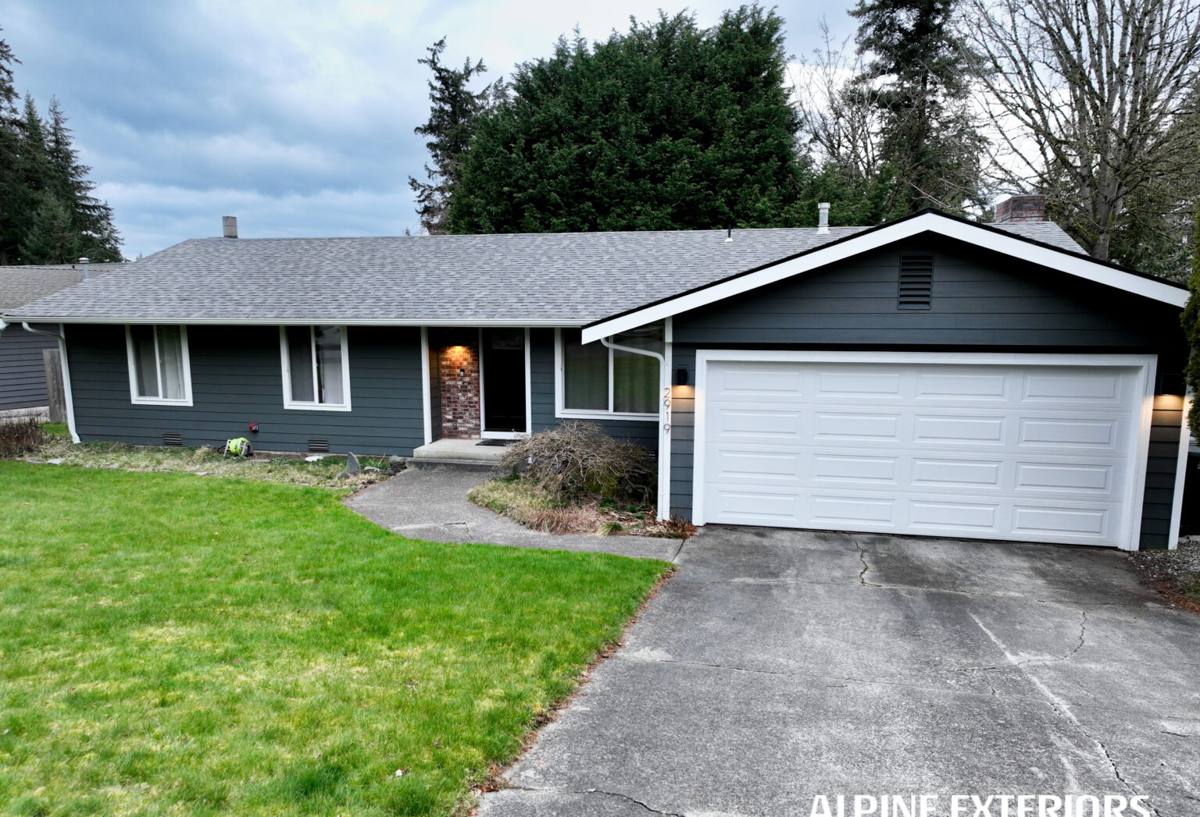
What "Correct" Fiber Cement Installation Actually Involves
Fiber cement siding is only as good as its installation. A huge share of the siding failures we get called out to inspect aren't material failures — they're installation shortcuts that let water in behind a product that was otherwise sound. In a climate like Laurel's, those shortcuts show up faster because there's simply more water hitting the wall more often.
The details that matter here
- Proper weather-resistive barrier and rain screen gap behind the siding, so any moisture that does get past the cladding can drain and dry instead of sitting against the sheathing
- Correct flashing at every window, door, and roofline intersection — the single most common source of hidden rot we find on older homes in this area
- Manufacturer-specified fastener spacing and nailing depth, since over-driven nails crack the board's factory finish and create an entry point for water
- Factory-cut and factory-primed edges wherever possible, with any field cuts sealed per the manufacturer's instructions before installation
- Proper clearance at grade and at horizontal trim, so siding isn't sitting in standing water or snow load against the foundation
Skip any one of these and you can end up with siding that looks fine from the curb for a few years while moisture works on the wall assembly behind it. That's the failure mode we see most often on re-siding jobs in this part of the county — not the siding itself, but what happened where two pieces met.
Why We Install Only James Hardie Fiber Cement
We don't install LP SmartSide, vinyl, Cemplank, Allura, primed spruce, or cedar. That's a deliberate standard, not a lack of options. Each of those products has legitimate uses and some real strengths — LP SmartSide's engineered wood is lighter and easier to handle, vinyl is inexpensive up front, cedar looks the way a lot of homeowners want their house to look. But every one of them asks a homeowner to accept a trade-off we're not willing to install into a home and stand behind, especially in a coastal, high-moisture climate like this one.
James Hardie fiber cement is non-combustible, dimensionally stable in wet-dry cycling, and comes with a factory-applied ColorPlus finish that's baked on and warranted separately from the substrate — meaning the color coat is engineered to resist the fading and chalking that salt air and UV accelerate. Hardie also builds climate-specific product lines (their HZ5 line, for example, is engineered for wetter climates), so the board itself is manufactured with this region's weather in mind rather than a one-size-fits-all approach. That combination — non-combustible material, factory finish, and a transferable warranty backed by one of the largest manufacturers in the category — is why we standardized on it and why we don't split our crews' expertise across multiple systems.
How the alternatives compare on the specific issues Laurel's climate raises
| Material | Salt air / coastal exposure | Moisture behavior | Long-term maintenance |
|---|---|---|---|
| James Hardie fiber cement | Non-combustible, factory ColorPlus finish resists salt-driven fade | Dimensionally stable, engineered HZ lines for wet climates | Repaint cycle much longer than wood; occasional caulk/touch-up |
| Cedar | Natural rot resistance but finish degrades quickly in salt air | Absorbs and releases moisture with the seasons; prone to cupping | Refinish every few years; ongoing moss and mildew treatment |
| Vinyl | Can fade and become brittle; seams are a weak point in wind-driven rain | Doesn't rot, but doesn't manage trapped moisture behind it either | Low, but cracked/warped panels are common after storms and aren't repairable |
| Engineered wood (LP SmartSide, etc.) | Performs well if the finish stays intact | Vulnerable at any breach in the factory seal | Depends heavily on installation quality and prompt repair of any damage |
Our Process for a Laurel Job
Every Fiber Cement Siding project we run in this area follows the same sequence, whether it's a full re-side or a targeted repair section:
- On-site inspection — we look at the current siding, check for hidden moisture damage at penetrations and trim, and assess what the wall assembly actually needs, not just what it looks like it needs from the ground
- Written scope and product selection — HardiePlank lap siding, HardiePanel, or a mix with HardieTrim, specified by profile, exposure, and ColorPlus color
- Tear-off and wall prep — removing old siding down to the sheathing where needed, correcting any rot found, and installing or verifying the weather-resistive barrier and rain screen
- Flashing first — every window, door, and horizontal transition flashed before a single course of siding goes up
- Installation to Hardie's fastening and clearance specs — not shortcuts, not "how we've always done it"
- Final walkthrough — caulking, touch-up, and a check of every cut edge before we call the job done
That order matters. Flashing and drainage decisions made before the siding goes on are the ones that determine whether a house stays dry through its next twenty winters of Whatcom County rain.
Living With Fiber Cement Siding in a Salt-Air, Moss-Prone Climate
Fiber cement dramatically cuts the maintenance burden compared to wood, but "low maintenance" doesn't mean "no maintenance," especially this close to the water. A few realistic expectations for a Laurel home:
- Moss and algae still grow on any exterior surface in this climate — a soft wash once or twice a year keeps siding looking like it did on install day and prevents buildup that holds moisture against the board
- Caulking at trim joints and penetrations should get a visual check annually; it's the first thing to give way and the cheapest thing to fix before it becomes a bigger problem
- Salt spray settles on exterior surfaces near the water; a rinse during a regular wash-down keeps it from dulling the ColorPlus finish over time
- Gutters and downspouts need to actually direct water away from the wall — siding can only do its job if the water it's shedding doesn't come right back at the base of the wall
Cost Factors for Laurel Homeowners
Every home is different, but the same variables drive cost on most jobs in this area:
| Factor | Why it moves the price |
|---|---|
| Tear-off scope | Full removal to bare sheathing costs more than installing over a sound, code-compliant existing layer, but it's the only way to fix hidden moisture damage |
| Wall condition | Rot repair at sheathing or framing, found once old siding comes off, is billed separately from the siding install itself |
| Siding profile and trim | HardiePanel with battens, wider trim boards, and custom color selections all add labor and material cost over a standard lap profile |
| Home height and access | Multi-story sections, steep roof pitches, and limited equipment access all add time |
| Flashing and detail work | Homes with lots of windows, dormers, or roof-wall intersections need more flashing labor per square foot of siding |
We give a written, itemized estimate before any work starts, so a Laurel homeowner knows exactly what's driving the number rather than a single lump-sum figure.
Signs a Laurel Home Needs New Siding Soon
- Paint that's peeling, bubbling, or needing repainting more often than every 5-7 years
- Soft spots when you press on siding near the bottom edge or below windows
- Persistent moss or dark staining that comes right back after cleaning
- Visible gaps, warping, or cupping in existing boards or panels
- Rising energy bills that suggest the wall assembly isn't sealing the way it used to
- Siding that's original to a home built more than 20-25 years ago, regardless of visible condition
Why a Crew That Already Works Laurel Makes a Difference
A crew that installs siding across a lot of different climates treats every job the same. A crew that works this specific stretch of Whatcom County regularly already knows which walls take the worst of the wind off the bay, where moss builds up fastest, and which older homes in the area are likely to have hidden moisture issues behind their original siding. That local pattern recognition shows up in the estimate — we're not guessing at what a Laurel home needs, we're applying what we've already seen on homes like it nearby.
It also means faster response if something does come up after installation. A local crew doesn't have to schedule a service call around a drive from out of the area — we're already working in the neighborhood.
If you're weighing a full re-side or just want an honest read on what your current siding needs, we're happy to take a look. Fill out the form below for a free, no-pressure estimate on Fiber Cement Siding for your Laurel home.