 Semiahmoo
 Roof Replacement in Ferndale: Built for This Coastline, Not a Catalog Climate
Ferndale sits close enough to the water that homes here take a different kind of beating than roofs twenty miles inland. Salt-laden air off the Strait, long stretches of driving rain, and a moss season that can run most of the year all work on a roof in ways that generic manufacturer literature doesn't account for. When we replace a roof in Ferndale, we're not just swapping old shingles for new ones — we're building an assembly that's meant to hold up to this specific stretch of Whatcom County.
A roof replacement is one of the few home improvements where "good enough" and "done right" can look identical the day the crew leaves and then diverge fast over the next five winters. The difference shows up in the underlayment nobody sees, the flashing details around every penetration, and the ventilation that keeps moisture from building up in the attic. That's what this page is about — what a correct roof replacement actually involves here, and why it matters more in Ferndale than it would somewhere dry and inland.
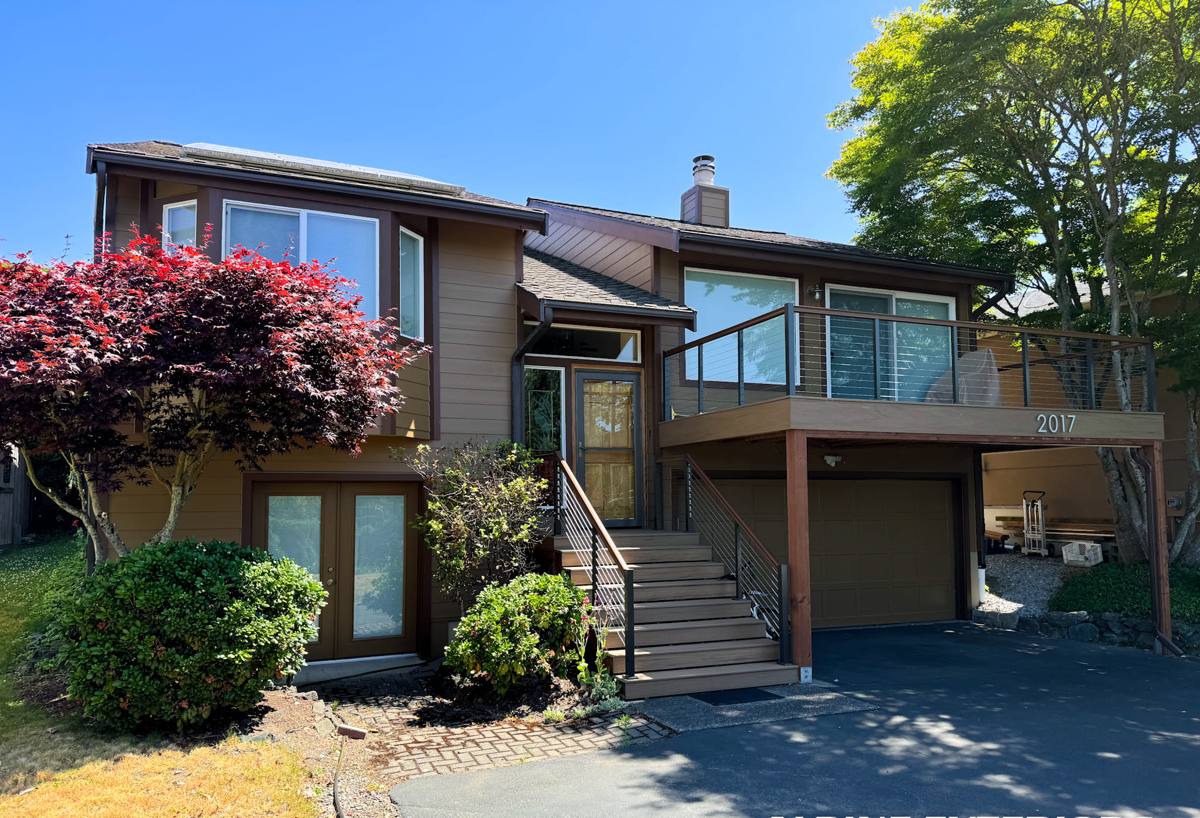
What Whatcom County's Climate Actually Does to a Roof
Salt Air and Metal Fatigue
Homes near the water deal with airborne salt that accelerates corrosion on exposed metal — flashing, fasteners, vent caps, and gutter hardware all age faster here than they would in a landlocked town. Cheap or mismatched metal components are usually the first thing to fail, well before the shingles themselves wear out. We spec corrosion-resistant flashing and fasteners specifically because of this exposure, not as an upsell.
Driving Rain and Wind-Driven Wet
Whatcom County storms don't always come straight down. Wind-driven rain gets pushed sideways and upward under roof edges, around chimneys, and into any gap in the flashing that a calmer climate might tolerate. That means valleys, eave edges, and every penetration need to be detailed for wind-driven water, not just gravity drainage.
Moss, Shade, and Slow Drying
Ferndale's tree cover and the region's damp, overcast stretches mean roofs here dry out slower than roofs in sunnier climates. Slower drying gives moss and algae more time to establish, and once moss takes hold it holds moisture against the roofing material, works into seams, and can lift shingle edges over time. A roof that's constantly damp underneath the moss ages faster than one that dries out between rains, no matter what the material is rated for.
What a Correct Roof Replacement Includes
A roof replacement done right isn't just about the visible shingle layer. Every layer underneath it is doing a job, and in a climate like this one, skipping or skimping on any layer shows up as a leak, a rot spot, or a premature failure a few years down the road.
- Tear-off and deck inspection — full removal of old roofing so the deck underneath can actually be checked for soft spots, rot, or delamination, especially around valleys and chimneys where past leaks tend to hide.
- Deck repair before anything goes back down — any compromised sheathing gets replaced, not covered over. This is the step that gets skipped when a job is priced too low.
- Ice-and-water or synthetic underlayment at vulnerable areas — valleys, eaves, and penetrations get extra protection against wind-driven rain, since these are the spots where water finds a way in first.
- Correct flashing at every penetration — chimneys, vents, skylights, and wall intersections all need step flashing, counter-flashing, or pipe boots sized and installed for the actual roof pitch, not a one-size approach.
- Balanced attic ventilation — intake at the eaves and exhaust at the ridge, sized to the attic volume, so moisture doesn't get trapped and condense on the underside of the deck.
- Proper starter strip and ridge cap installation — these are the first places wind gets a grip on shingles that were installed without them, or installed with the wrong ones.
Material Choices for a Coastal, Mossy Climate
There isn't one "best" roofing material for every home — it depends on budget, roof pitch, and how much maintenance a homeowner wants to keep up with. Here's how the common options compare for Ferndale's conditions specifically.
| Material | Moss/Moisture Resistance | Salt-Air Durability | Maintenance |
|---|---|---|---|
| Asphalt composition shingle (standard) | Moderate — benefits from algae-resistant granules | Good, with corrosion-resistant flashing | Periodic moss treatment recommended |
| Asphalt composition shingle (algae-resistant / architectural) | Better — copper or zinc granules slow algae growth | Good, with matching quality flashing/fasteners | Lower, but not maintenance-free |
| Standing-seam metal | Very good — sheds moisture fast, little surface for moss to grip | Depends heavily on coating and fastener quality | Low, mainly gutter and fastener checks |
| Cedar shake | Poor without diligent upkeep — retains moisture, feeds moss/rot | Fair, but finish needs reapplication | High — this is a maintenance-intensive choice here |
We're upfront that cedar shake, while a classic look, is a tough sell as a low-maintenance choice in a shaded, damp Ferndale lot — it's the material most prone to holding moisture and feeding the exact moss problem this climate already creates. That's a maintenance and moisture-behavior tradeoff, not a knock on the product itself; some homeowners are happy to keep up with it, and we'll install it correctly if that's the choice. For most Ferndale homes, an algae-resistant architectural shingle or a well-detailed metal roof gives the best balance of appearance, durability, and manageable upkeep.
Our Process for a Ferndale Roof Replacement
1. On-Site Assessment
We look at the whole system, not just the shingles — attic ventilation, visible flashing condition, gutter and drainage patterns, moss coverage, and any interior signs of past leaks. This is also when we talk through material options against your budget and the specifics of your lot (tree cover, sun exposure, roof pitch).
2. Clear, Written Estimate
You get a scope of work and a price before anything is scheduled — what's being torn off, what underlayment and flashing will be used, and what happens if the tear-off reveals deck damage. No surprise change orders for things a proper inspection should have caught up front.
3. Tear-Off and Deck Check
Old roofing comes off, the deck gets inspected in daylight, and any soft or rotted sheathing is flagged and replaced before new material goes down.
4. Installation to Manufacturer Spec — and Local Practice
We follow manufacturer installation requirements (that's what keeps your warranty valid) and layer in the local practices this coastline calls for — extra attention at valleys and eaves, corrosion-resistant metal, and ventilation that's actually balanced for the attic it's serving.
5. Cleanup and Final Walkthrough
Job site is cleaned of debris and nails, and we walk the roof and the estimate scope together before calling it done.
Why a Crew That Already Works Ferndale Matters
Roofing crews that mostly work drier, inland regions can install a roof that meets code and still underperforms here, simply because they're not used to detailing for wind-driven rain or planning ventilation around a shaded, moss-prone lot. A crew that already works Whatcom County's coastal communities has seen which flashing details actually hold up, which materials handle the moss season, and where past jobs in this area tend to develop problems first. That local pattern recognition is hard to substitute with a generic install checklist.
There's also a practical side to hiring local: warranty and service calls are simpler when the contractor is a short drive away rather than based somewhere they'll never come back to. A roof replacement should be the last time you deal with that roof for a couple of decades — but if something does come up, proximity matters.
Signs Your Ferndale Home May Need a Roof Replacement Soon
- Granules collecting in gutters or at downspout outlets — a sign shingles are wearing thin
- Moss buildup that returns quickly after cleaning, or moss visibly lifting shingle edges
- Shingles that are curling, cracking, or missing, especially after a windy winter
- Daylight visible through the attic roof deck, or damp insulation near the eaves
- Flashing around chimneys or vents that's rusted, loose, or visibly gapping
- Interior ceiling stains, especially near valleys, chimneys, or skylights
- A roof approaching or past the manufacturer's expected service life for its material and exposure
Timing a Replacement in This Climate
Late spring through early fall tends to offer the most consecutive dry days for tear-off and installation, which matters more here than in drier climates since an open deck exposed to Whatcom County rain is a real risk during the job. That said, roof failures don't wait for good weather, and we can work through wetter stretches with proper tarping and sequencing when a replacement can't wait. If your roof is showing signs of trouble, it's worth getting an assessment before the next wet season rather than after a leak forces the issue.
If you're weighing a roof replacement for a home in Ferndale or anywhere else along this stretch of Whatcom County, we're happy to take a look and give you a straight read on condition, options, and cost — no pressure, no obligation. Fill out the form below and we'll get an estimate on the calendar.