 Semiahmoo
 Why Drayton Harbor Wears Out Siding Faster Than Most Places
Drayton Harbor sits at the edge of the Salish Sea, and that location cuts both ways. It's part of what makes this stretch of Whatcom County a good place to live, and it's also exactly why siding here fails sooner than siding installed twenty miles inland. Homes facing the harbor or sitting close to the water take on salt-laden air almost year-round. That salt content settles into porous or poorly sealed siding, corrodes exposed fasteners, and slowly breaks down finishes that were never built to handle it.
Add in driving rain that comes sideways off the water during fall and winter storms, and you get a wind-driven moisture problem, not just a rain problem. Water doesn't fall straight down and run off — it gets pushed up under laps, into seams, and behind trim that isn't detailed correctly. Then there's the long moss season. Whatcom County's mild, wet winters and short daylight hours mean north- and west-facing walls stay damp for months at a stretch, which is exactly the environment moss and algae need to take hold on siding surfaces that trap moisture.
None of this means a house near Drayton Harbor is doomed to constant siding problems. It means the siding and the installation have to be matched to those conditions on purpose, not installed the same way you'd install siding on a dry, inland lot.
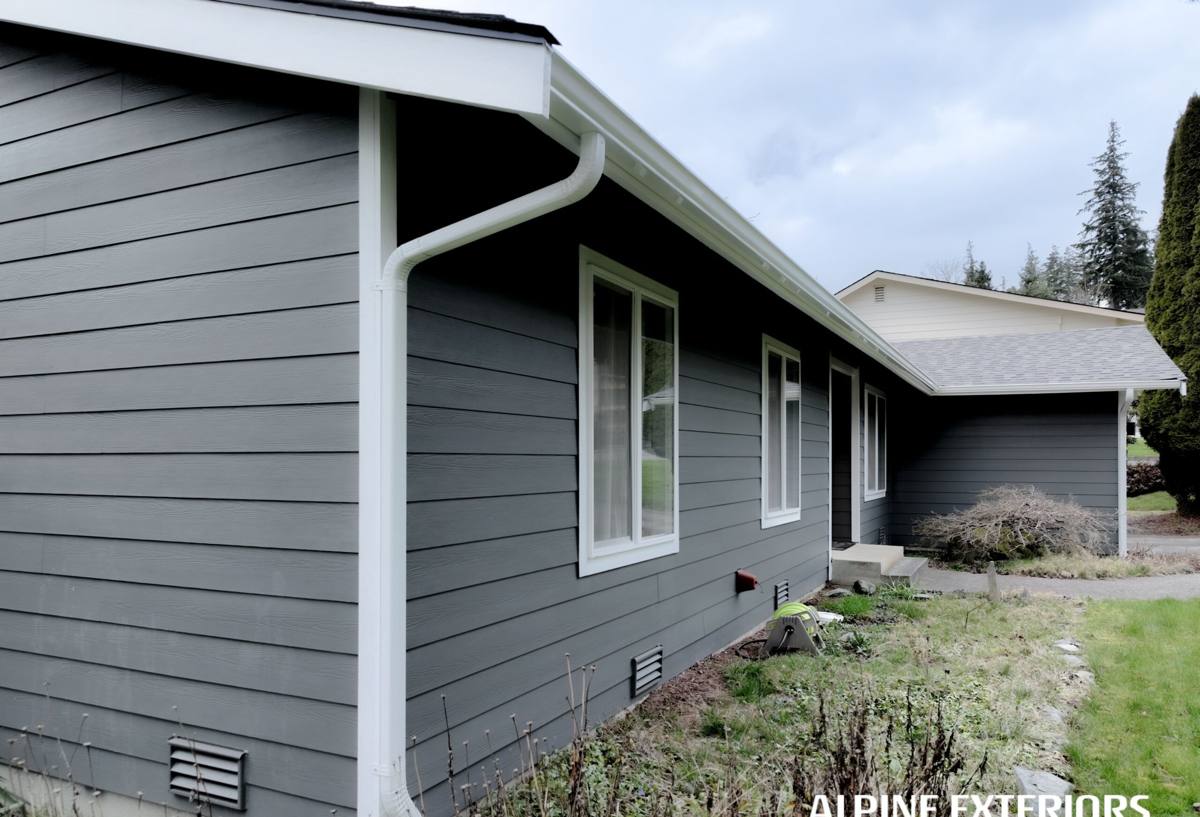
Signs Your Siding Has Reached the End of Its Service Life
Siding failure near the water rarely shows up as one obvious problem. It's usually a combination of small signs that, together, tell you patching isn't going to solve anything anymore.
- Soft or spongy spots when you press on the siding, especially near the bottom courses or around window and door trim
- Paint that's peeling, bubbling, or chalking faster than a normal repaint cycle would explain
- Visible warping, cupping, or separation at the seams and laps
- Persistent green or black staining that comes back within a season of cleaning
- Rust streaks running down from nail heads or metal trim pieces
- A musty smell in interior rooms along exterior walls, which often points to moisture already past the siding
- Siding that's original to a home built more than 20-25 years ago, particularly if it's ever had standing moss cover
If you're seeing two or three of these at once, that's usually the point where spot repair stops making financial sense and a full replacement becomes the more honest recommendation.
What a Correct Replacement Actually Involves
A siding replacement is only as good as what happens underneath it. In a location like Drayton Harbor, the parts nobody sees after the job is done matter more than they would somewhere drier.
Tear-Off and Sheathing Inspection
Once the old siding comes off, the sheathing underneath gets a real inspection — not a glance. This is the point where hidden rot, soft spots, and past water damage finally show themselves. Any compromised sheathing gets cut out and replaced before anything new goes back on. Skipping this step is the single most common reason a replacement fails early, because new siding over damaged sheathing just hides the problem again.
Weather-Resistive Barrier and Flashing
Behind the siding, a properly lapped weather-resistive barrier and correctly integrated flashing at every window, door, and roofline transition are what actually stop wind-driven rain from getting behind the wall assembly. On a harbor-facing home, we pay particular attention to flashing at horizontal trim and any butt joints, since those are the spots wind-driven rain finds first.
Fasteners and Hardware
Salt air corrodes standard fasteners faster than most homeowners expect. Corroded fastener heads are what cause those rust streaks and, eventually, loose siding. We use fasteners rated for the exposure the home actually faces rather than defaulting to whatever's cheapest, because replacing siding again in ten years over a few cents per nail isn't a trade-off worth making.
The Siding Itself
This is where product choice matters most, and it's the reason we install James Hardie fiber cement exclusively rather than vinyl, LP SmartSide, or other fiber cement brands. More on that below.
Why We Install Only James Hardie Fiber Cement Here
We get asked why we don't offer vinyl or engineered wood siding, and the honest answer is climate exposure. Vinyl softens, warps, and becomes brittle with the temperature swings and UV exposure it sees over decades, and it doesn't hold up well to wind-driven impact or the kind of long-term moisture cycling a harbor-adjacent home deals with. Engineered wood products like LP SmartSide use wood strand cores that, however well-treated, remain wood — and wood-based siding is inherently more vulnerable to the sustained dampness and moss-friendly conditions that define a Whatcom County winter.
James Hardie fiber cement is non-combustible, doesn't support moss and algae growth the way wood-based products do, and is manufactured in HZ (HardieZone) formulations engineered for specific climate exposure — the Pacific Northwest falls under HZ5, which accounts for regional moisture and temperature patterns. The factory-applied ColorPlus finish is baked on under controlled conditions, which holds up better against salt air and UV than field-applied paint, and it comes with a transferable warranty that reflects the manufacturer standing behind long-term performance in exactly this kind of environment. We standardized on it because it's the one product we're comfortable telling a Drayton Harbor homeowner will still be doing its job in twenty years.
What Actually Drives the Cost of a Replacement
Every siding replacement quote is a little different because every house is different. The factors below are what actually move the number, in general terms — we'll walk through your specific home during the estimate rather than quoting off a phone call.
| Cost Factor | Why It Matters | Typical Impact |
|---|---|---|
| Sheathing condition under old siding | Hidden rot found during tear-off requires repair before new siding goes on | Moderate to high, and hard to know until tear-off |
| Home size and number of stories | More square footage and taller walls mean more material, labor, and staging | High |
| Trim and architectural detail | Corners, window casings, and dormers all add cutting, fitting, and flashing time | Moderate |
| Siding profile and accessories | Lap width, shingle-style panels, and trim boards vary in material and install time | Low to moderate |
| Site access and staging | Waterfront lots, slopes, or tight setbacks can slow equipment and material staging | Low to moderate |
| Removal and disposal of old siding | Volume and type of old material affects hauling and disposal time | Low |
How Our Process Works
- On-site assessment. We walk the exterior, check for soft spots and moisture signs, and look at how the home is oriented relative to the harbor and prevailing weather.
- Written estimate. You get a clear scope of work and pricing before anything is scheduled — no surprise add-ons for things we could have identified up front.
- Tear-off and sheathing repair. Old siding comes off, sheathing gets inspected, and any damaged sections are documented and replaced.
- Weather barrier and flashing install. This is the step that determines how the wall performs for the next several decades, and we don't rush it.
- Hardie siding installation. Panels or lap siding go on per manufacturer specification, with fastener spacing and clearances that hold up under real inspection, not just a quick look.
- Final walk-through. We go over the finished work with you before calling the job complete.
Why Local Experience in This Specific Area Matters
Siding installation isn't identical from one town to the next, and a crew that's mostly worked drier, inland jobs can miss details that matter on a harbor-facing home. A crew that already works in and around Drayton Harbor and the broader Semiahmoo area knows which wall orientations take the worst of the wind-driven rain, how aggressively moss establishes itself on shaded elevations here, and which flashing and fastener choices actually hold up against sustained salt exposure rather than just performing well in a showroom or a drier climate zone. That familiarity shows up in fewer callbacks and siding that's still doing its job well past the point where a mismatched installation would already be showing problems.
Timing the Project Around Whatcom County Weather
Siding replacement can happen across most of the year here, but the driest stretches — generally summer into early fall — give the most flexibility for tear-off and sheathing repair without weather delays. That said, a genuinely failing siding system is worth addressing whenever it's found rather than waiting for a "perfect" season, since ongoing moisture intrusion behind a compromised wall doesn't pause for scheduling convenience. We'll be straight with you about the best timing window for your specific project when we assess the home.
If your siding is showing its age, or you just want a second opinion from a crew that works this exact area, we're happy to take a look. The estimate is free, there's no pressure attached to it, and you'll get a straight answer about whether replacement is actually the right call for your home.