 Semiahmoo
 Building a Deck That Actually Holds Up in Laurel
Laurel sits close enough to Semiahmoo and the water that every outdoor structure on your property deals with the same three things: salt-laden air, driving rain that comes in sideways more often than straight down, and a moss season that can run half the year. A deck built the way it would be built in a dry inland climate simply doesn't last as long out here. The wood cups, the fasteners bleed rust, and moss gets a foothold in the first damp fall and never really leaves.
A deck that's built for this specific stretch of Whatcom County starts with different assumptions than a generic build: more attention to drainage, corrosion-resistant hardware from the first screw, and a structural layout that doesn't trap moisture against the house or against itself. That's the difference between a deck that needs major work in eight years and one that's still solid at twenty-five.
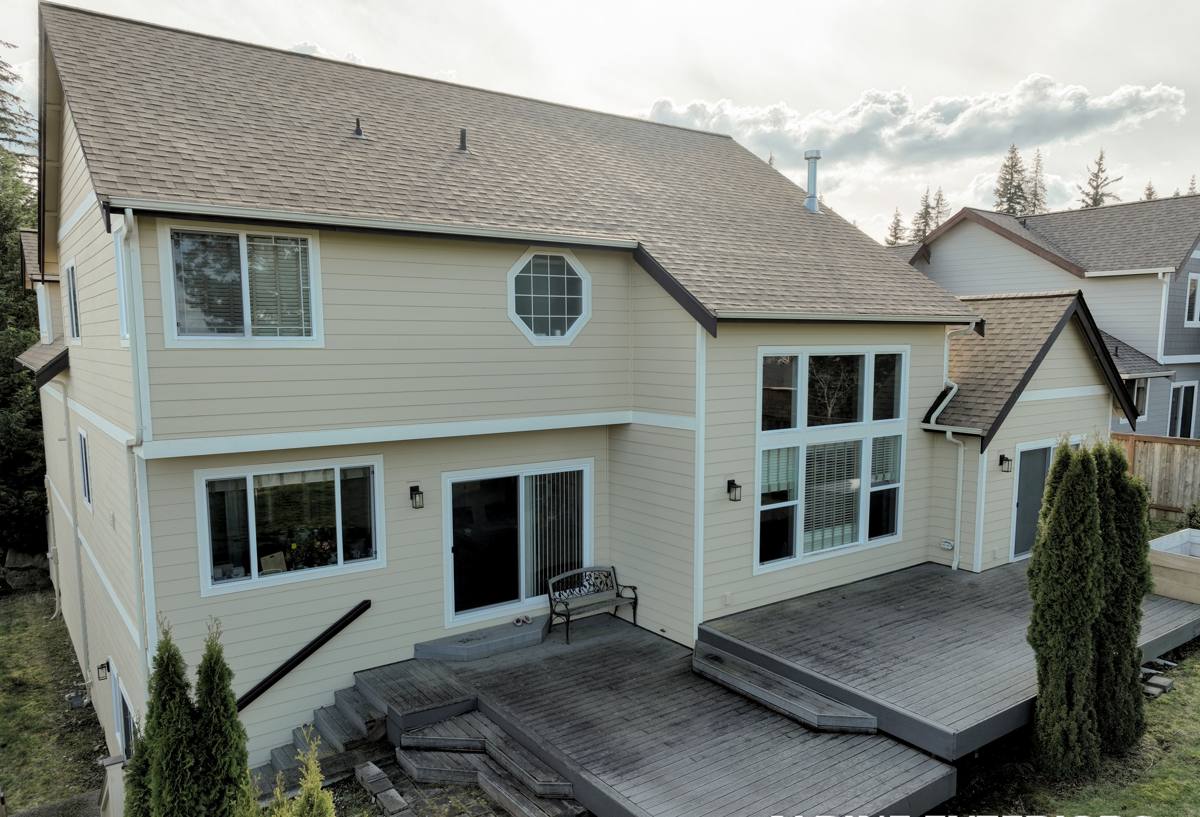
What Salt Air and Coastal Moisture Actually Do to a Deck
Salt air isn't just an inconvenience — it's a slow chemical process. Airborne salt accelerates corrosion on any exposed metal, which is why decks near the water fail at their fasteners and connectors long before the lumber itself gives out. A deck board can look fine while the nail or screw holding it down has already lost most of its strength.
Driving rain adds a second problem: water doesn't just fall on a deck, it gets pushed under railings, into end-grain cuts, and behind ledger boards where it can sit against the house framing. And moss, once established on a damp, shaded deck surface, holds moisture against the wood around the clock, which is exactly the condition rot needs to get started.
None of these are dramatic, one-time failures. They're cumulative. That's why the right materials and the right details at the framing stage matter more here than they would in a drier climate — the deck has to shed water and resist corrosion continuously, not just look good on installation day.
The Three Failure Points We See Most Often
- Fasteners and hardware that weren't rated for coastal exposure, corroding from the inside out
- Ledger board connections without proper flashing, letting water track back into the house rim joist
- Deck surfaces with poor drainage or airflow underneath, holding moss and moisture against the boards
Choosing the Right Decking Material for This Climate
There's no single "best" decking material — there's a best fit for your budget, your maintenance appetite, and how exposed your specific lot is to wind and rain. Here's how the common options actually compare once you factor in a coastal Whatcom County climate rather than a national average.
| Material | Upfront Cost | Maintenance in This Climate | Notes |
|---|---|---|---|
| Pressure-treated wood | Lowest | Annual cleaning and periodic sealing to fight moisture and moss | Good value if you're willing to stay on top of upkeep |
| Cedar | Moderate | Regular sealing; naturally more rot-resistant than pine/fir | Looks great, but salt air and rain still wear on the finish faster than inland |
| Composite decking | Higher | Low — occasional washing, no sealing or staining | Resists moisture and moss buildup well; color and board quality vary a lot by brand |
| PVC/capped composite | Highest | Lowest — essentially just cleaning | Best moisture performance of the group; best for consistently damp, shaded lots |
For a lot in Laurel with real shade and consistent moisture — near mature trees, a north-facing yard, or close to the water — we lean harder toward composite or capped composite because the maintenance savings compound year after year. For a sunnier, more open lot, a well-maintained cedar or treated wood deck can still make sense and costs less up front.
A Note on Fasteners and Hardware
Whatever decking material you choose, the hardware underneath matters just as much. We use stainless steel or coated fasteners rated for coastal/corrosive environments on every deck we build here, not just the boards that are visible. It costs more than standard hardware, but replacing a beautiful deck surface because the joist hangers rusted through is a bad trade.
Framing, Footings, and the Parts You'll Never See
A deck's surface gets all the attention, but its lifespan is decided underneath. In this climate we pay particular attention to:
- Footings sized for our soil and frost conditions, set deep enough to stay stable through the wet season
- Joist spacing tightened up from the bare minimum, since consistently wet lumber flexes and moves more over time
- Proper ledger board flashing where the deck attaches to the house, so water is directed away from the rim joist instead of into it
- Gaps and drainage paths between boards and under the structure so air can actually move and dry things out between storms
This is the part of the job that doesn't show up in a photo but is the actual difference between a deck that's still tight and quiet in fifteen years and one that starts creaking and sagging in five.
Railings, Stairs, and Details That Matter Near the Water
Railings and stair stringers see more direct rain exposure than the deck surface itself because they're vertical and catch driving rain from the side. We detail these connections with the same corrosion-resistant hardware as the frame, and we're careful about end-grain cuts on any wood components, since exposed end grain absorbs water far faster than a flat face and is where rot usually starts first on a railing post or stair stringer.
Cable rail and metal baluster systems have become more common on newer builds in this area, and they hold up well as long as the metal components are genuinely rated for a coastal environment — not just labeled "outdoor" for a drier market.
Designing a Deck Around Laurel's Actual Conditions
Beyond materials, good deck design in this area accounts for wind exposure, shade patterns from mature trees, and how the yard drains during the wettest months. A few things worth thinking through before you finalize a layout:
Questions Worth Answering Before You Design
- Does the deck sit in consistent shade that will encourage moss, or does it get enough sun to dry out between rains?
- Is the site exposed to prevailing wind and driving rain off the water, or is it sheltered by the house or trees?
- Where does rainwater currently run off your roof and yard, and will the new deck interrupt or redirect it?
- Do you want a multi-level design, and if so, how will each level drain independently?
None of this needs to complicate the project — it just needs to be part of the conversation before boards get ordered, not something discovered after the first hard rain.
Our Process for a Custom Deck in Laurel
We keep the process straightforward and don't skip the parts that matter later:
- On-site visit — we look at your yard's exposure, drainage, existing structure (if replacing a deck), and how the space will actually be used
- Material and layout discussion — honest trade-offs between wood and composite options for your specific lot, no upselling toward the most expensive product by default
- Written estimate — clear scope, materials, and timeline before any work starts
- Permitting — handled as part of the project where required
- Build — footings and framing first, with flashing and hardware detailed properly before decking goes down
- Final walkthrough — so you know what maintenance, if any, your specific decking material needs going forward
What Maintenance Actually Looks Like Here
Whatever material you choose, plan for the realities of a long moss season rather than fighting it as a surprise every spring. A simple, honest maintenance routine for this climate looks like:
- Sweep debris and standing leaves off the deck regularly, especially under trees
- Wash the surface at least once a year to remove moss buildup before it gets a grip
- For wood decks, reseal or re-stain on the manufacturer's recommended schedule — don't stretch it because the deck "still looks fine"
- Check railing posts and stair connections annually for movement or corrosion at fastener points
- Keep gutters and downspouts clear so roof runoff isn't being dumped onto or near the deck structure
Composite and capped composite decks cut most of this list down to just the first two items, which is the main reason homeowners in consistently wet, shaded parts of Laurel tend to prefer them.
Why Local Experience Matters for This Job
A deck contractor who mostly works inland can build a perfectly good-looking deck that still isn't built for this climate — the visible workmanship might be fine while the hardware, flashing, and drainage details underneath are generic. A crew that already works Laurel and the broader Semiahmoo area has seen which details actually fail here over time, not in theory. That's reflected in the hardware we spec, how we detail ledger flashing, and the honest conversations we have about which decking material fits your specific lot instead of whatever's easiest to sell.
If you're planning a new deck or replacing one that's showing its age, we're happy to take a look and walk you through your options. There's no pressure and no cost to get an honest assessment and a written estimate — just fill out the form below and we'll set up a time to come by.