 Semiahmoo
 Building Decks for a Waterfront Neighborhood, Not a Catalog Photo
Blaine Harbor sits close enough to the water that every deck built here answers to the same conditions: salt-laden air off the Strait, wind-driven rain that finds its way under flashing that would be fine forty miles inland, and a wet season that runs long enough to grow moss on anything that stays damp for more than a day or two. A deck design that works in a dry, inland Whatcom County yard doesn't automatically work here. We build decks specifically for this stretch of coastline, and that shapes almost every decision — fastener choice, framing layout, board spacing, even where we tell a homeowner not to put a planter box.
This page is about one job, done right, in one place: custom deck construction and rebuilds for Blaine Harbor homes. Not a general deck overview — the specific stuff that matters when your lot is this close to salt water.
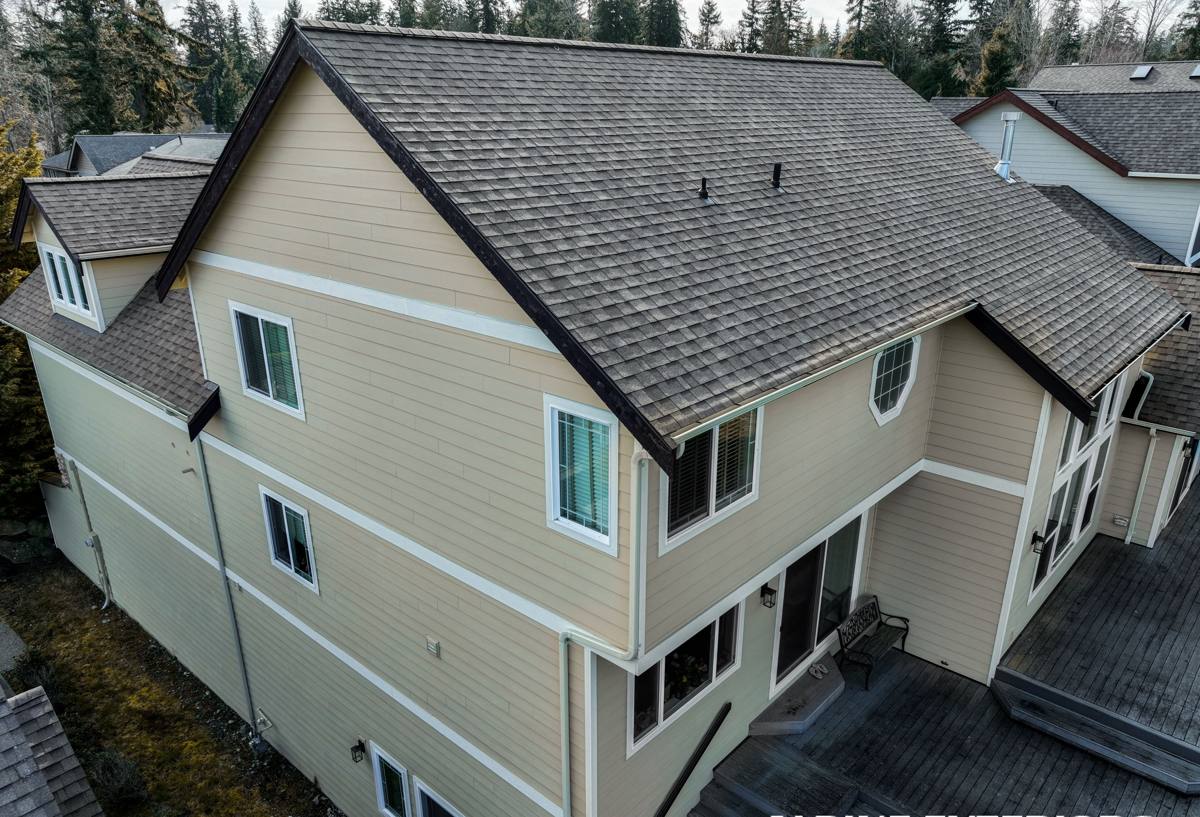
What Semiahmoo's Climate Actually Does to a Deck
Salt Air and Hardware
Airborne salt accelerates corrosion on fasteners, brackets, and connectors far faster than most homeowners expect. A deck built with standard hot-dip galvanized hardware inland might hold up for decades. That same hardware within a mile or two of Semiahmoo's shoreline can show rust streaks and early corrosion in a fraction of the time. Ledger bolts, joist hangers, and structural screws are load-bearing — when they corrode, it's not cosmetic, it's a safety issue.
Driving Rain and Water Management
Wind off the water doesn't just rain down, it rains sideways. That means flashing at the ledger board, gapping between deck boards, and drainage under the structure all matter more here than in a sheltered yard. Water that would simply run off a flat deck in calm conditions gets pushed under boards and into end grain when the wind's up, which is most of the wet season.
Moss, Algae, and Prolonged Dampness
Whatcom County's wet stretch runs long, and shaded, north-facing, or tree-covered decks in Blaine Harbor can stay damp for weeks at a time. Moss and algae aren't just a slip hazard — they hold moisture against the wood or composite surface, which shortens the life of whatever's underneath. Board spacing, airflow underneath the deck, and surface material all affect how fast that buildup happens.
What a Correctly Built Deck Looks Like Here
A deck built for Blaine Harbor conditions isn't a different-looking deck — it's the same deck built with different attention to details that don't show up until year three or four.
- Stainless steel or coated structural fasteners at the ledger and other high-corrosion-risk connections, not bargain electro-galvanized hardware
- Ledger flashing detailed to shed wind-driven rain, not just vertical rainfall
- Joist and beam spacing sized for the actual decking material, not stretched to save a few boards
- Consistent board gapping for drainage and airflow, adjusted for the moisture content of the decking at install
- Under-deck ventilation and grading that lets water actually leave the area instead of pooling
- Post bases set to keep end grain off standing water and soil contact
- Stair and railing hardware rated for the same corrosion exposure as the rest of the structure
None of this is exotic. It's standard deck-building knowledge applied consistently, because skipping any one of these on a waterfront lot shows up early, not eventually.
Decking Material: Trade-offs, Not a Sales Pitch
There's no single right answer for every Blaine Harbor deck — it depends on sun exposure, shade, budget, and how much upkeep a homeowner actually wants to do.
| Material | How it handles the coastal climate | Maintenance reality |
|---|---|---|
| Pressure-treated wood | Affordable, but end grain and fastener points need real attention to shed water and resist salt corrosion | Annual cleaning and periodic sealing; moss removal in shaded areas |
| Cedar | Naturally rot-resistant and handles moisture reasonably well, but still needs protection at fastener points | Regular cleaning and refinishing to hold color and resist moss |
| Composite decking | Resists moisture absorption and doesn't feed rot, though surface can still grow algae/moss in shaded, damp spots | Periodic washing; no sealing or staining required |
| PVC decking | Fully moisture-resistant surface material, holds up well to salt exposure on the surface itself | Lowest upkeep of the group; still needs occasional cleaning |
Whatever surface material a homeowner picks, the framing underneath — the part nobody sees after the build — gets built to the same corrosion and drainage standard. That's where most deck failures near the water actually start.
New Builds vs. Rebuilding an Aging Deck
Blaine Harbor has a mix of newer construction and older homes with decks that have already taken a decade or two of coastal exposure. The approach is different for each.
New Deck Construction
On a new build, we're starting from bare ground or an existing footprint, which means full control over footing depth, ledger flashing, hardware selection, and drainage from day one. This is the easier path to a deck that's genuinely built for the conditions rather than adapted to them later.
Rebuilding or Replacing an Existing Deck
A lot of our Blaine Harbor work is replacing decks that were built to a lower standard, or built for a different climate, and are now showing it — soft spots near the ledger, rusted hardware, boards that stay wet and mossy no matter how often they're cleaned. In these cases we evaluate what's salvageable (posts and footings are sometimes fine) versus what needs to come out entirely (ledger connections and framing are the usual culprits). We'll tell a homeowner honestly when a repair is a reasonable stopgap and when it's just delaying a full rebuild.
Our Process for a Blaine Harbor Deck Project
- On-site assessment. We look at sun and wind exposure, slope, drainage, proximity to the water, and — for a rebuild — the actual condition of the existing structure, not just the surface.
- Design and material discussion. We walk through decking and framing hardware options against the homeowner's budget and how much maintenance they want to take on long-term.
- Permitting. Deck projects in Whatcom County typically require a permit depending on size, height, and attachment to the home; we handle that process rather than leaving it to the homeowner.
- Demolition (rebuilds only). Old decking, framing, and hardware are removed and the substructure is inspected before anything new goes in.
- Framing and structural work. Ledger flashing, joists, beams, posts, and footings go in to the standard described above — this is the stage that determines how the deck ages, not the surface material.
- Decking, railing, and finish work. Surface material, railings, stairs, and any built-ins go on last, with fastener and hardware choices matched to the exposure level of that specific lot.
- Final walkthrough. We go over the finished deck with the homeowner, including what maintenance it actually needs given its exposure and material.
Why a Crew That Already Works Blaine Harbor Matters
A contractor who mostly builds decks in sheltered, inland yards can still build a structurally sound deck — but they may not default to stainless hardware at the ledger, or think twice about board gapping on a shaded, north-facing deck that never fully dries out. That's not a knock on their work generally; it's just not the problem they build for every day.
Working Semiahmoo and the surrounding Whatcom County coastline regularly means we've seen how decks here actually fail over time — which corners, if cut, come back to bite a homeowner in year three instead of year fifteen. We build to account for that from the start rather than treating it as an upgrade option.
Maintaining a Coastal Deck Once It's Built
Even a well-built deck in Blaine Harbor needs more attention than the same deck would inland. A short, honest maintenance routine keeps a good build from becoming a premature rebuild:
- Sweep debris and standing organic matter off the deck regularly, especially under furniture and planters
- Rinse or wash the surface periodically to slow moss and algae buildup, more often on shaded sections
- Check visible hardware — railing brackets, stair connections — for early rust or corrosion once or twice a year
- Keep gutters and downspouts near the deck clear so runoff isn't dumping extra water onto or under the structure
- Reseal or refinish wood decking on the schedule the material actually needs, not just when it looks faded
Getting Started
If you're planning a new deck or looking at an aging one in Blaine Harbor, we're happy to come take a look, walk through what your specific lot and exposure call for, and give you a straightforward estimate — no pressure, no upsell. Fill out the form below and we'll set up a time to talk through your project.