 Semiahmoo
 Roof Repair in Custer: What Local Homes Actually Need
Custer sits close enough to the water that salt air is part of daily life, and far enough into Whatcom County that winter storms roll through with real force. That combination is hard on a roof. Homes here deal with driving rain that finds its way sideways under poorly lapped flashing, moss that gets a running start every fall and doesn't let go until late spring, and salt-laden air that speeds up corrosion on anything metal that isn't rated for it. A roof repair that would hold up fine in a drier inland climate can fail here in a season or two if it's not done with this specific environment in mind.
We work on roofs throughout the Semiahmoo area, and Custer is one of the neighborhoods where we see the same handful of problems over and over. This page walks through what those problems are, what a correct repair actually involves, and how we handle the job from first look to final walk-through.
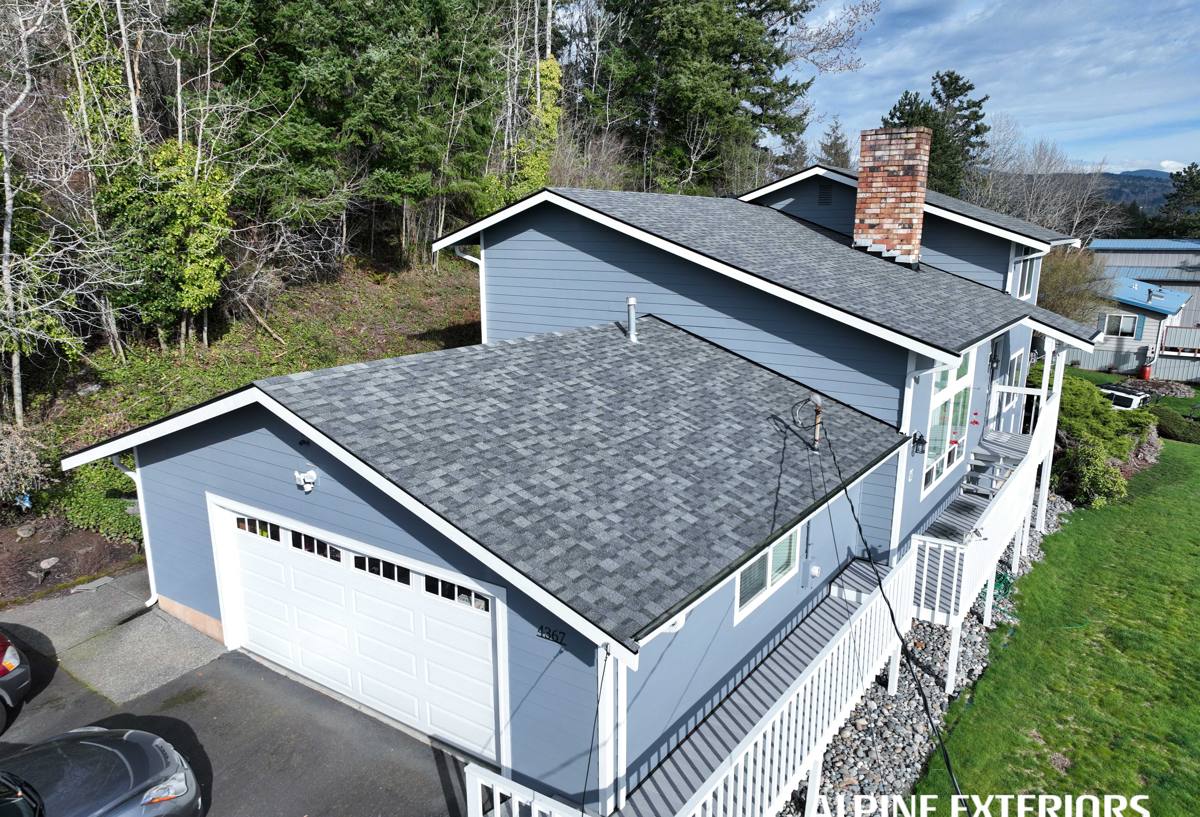
Why Custer's Climate Is Harder on Roofs Than It Looks
Salt Air and Metal Fatigue
Proximity to the water means airborne salt settles on roofing metal — flashing, drip edge, vent caps, fasteners — and accelerates oxidation. Galvanized fasteners that would last decades elsewhere can start weeping rust streaks in half that time this close to the coast. It's not dramatic, but it's steady, and it's one of the first things we check when we get on a roof out this way.
Driving Rain
Whatcom County storms don't always come straight down. Wind-driven rain gets pushed sideways and upward under shingle tabs, around chimney flashing, and into any gap that a calm-weather rain would never reach. Repairs that only address the visible leak point and ignore the wind-driven path tend to come back.
Moss Season
Shade, moisture, and mild temperatures make Custer roofs prone to moss for a good chunk of the year. Moss holds water against the shingle surface, lifts tabs as it grows, and works its way into nail lines and valleys. Left alone, it doesn't just look bad — it shortens the life of the roofing material underneath it.
Signs a Custer Roof Needs Repair
- Water stains on interior ceilings, especially after a windy rainstorm rather than a calm one
- Granules collecting in gutters or at downspout outlets
- Visible moss growth, particularly on north-facing slopes or under tree cover
- Curling, cracked, or missing shingle tabs
- Rust streaking below flashing, vents, or metal valleys
- Soft or spongy decking felt underfoot near valleys or chimneys
- Daylight visible through the attic roof deck
- Sagging or uneven rooflines viewed from the ground
Any one of these on its own might be minor. Two or three together usually means water has been getting in longer than the homeowner realized.
What a Correct Roof Repair Involves
A lasting repair starts with finding the actual entry point, not just the spot where the stain shows up inside. Water travels along rafters and decking before it drips somewhere visible, so the stain on a ceiling is often several feet from the real problem on the roof. We trace the path before we touch a single shingle.
Diagnosis First
We check flashing at every penetration — chimneys, vents, skylights — since these are the most common failure points on an otherwise sound roof. We look at valley metal for corrosion or improper lap direction, and we check decking for soft spots that indicate the leak has been active for a while.
Matching Materials
Repairs should match the existing roofing material in type, weight, and where possible, color and age. A patch that uses a different shingle profile or a mismatched metal will stand out and, more importantly, may not shed water the same way as the surrounding roof. If an exact match isn't available because the original product has been discontinued, we'll say so upfront and talk through the closest honest option rather than quietly installing something that doesn't perform the same.
Fastener and Flashing Standards
Given the salt air here, we use corrosion-resistant fasteners and flashing rated for coastal exposure rather than standard-grade materials that are fine sixty miles inland but won't hold up in Custer. This costs a little more upfront and saves a return trip in a few years.
Moss Treatment and Prevention
Where moss is part of the problem, repair work includes physically removing growth without tearing up granules, treating the area, and — where it makes sense — installing zinc or copper strips near the ridge so future moss growth is suppressed as rain washes trace metal down the slope.
Our Repair Process
- Inspection. We get on the roof (weather permitting) and in the attic if accessible, and document what we find with photos.
- Honest assessment. We tell you whether this is a repair or whether the roof is past the point where patching makes sense. We don't upsell a full replacement when a repair will genuinely hold.
- Written estimate. Scope, materials, and price in writing before any work starts.
- Repair work. Matched materials, coastal-rated fasteners and flashing, and attention to the wind-driven rain paths specific to this area.
- Cleanup and walk-through. We clear debris and walk you through what was done and what to watch for going forward.
Repair vs. Replacement: How We Decide
| Factor | Points Toward Repair | Points Toward Replacement |
|---|---|---|
| Age of roof | Under 15 years (asphalt) | Over 20-25 years (asphalt) |
| Extent of damage | Isolated to one area or penetration | Spread across multiple slopes |
| Decking condition | Solid, dry underneath | Soft, rotted, or repeatedly wet |
| Granule loss | Minimal, localized | Widespread, shingles look bare |
| Moss history | First occurrence, treatable | Chronic, has lifted shingles repeatedly |
| Number of past repairs | First or second repair | Third+ repair to the same area |
These are general guidelines, not a formula — a 12-year-old roof with poor original flashing work can need replacement sooner than this table suggests, and a well-built 20-year-old roof can sometimes take a targeted repair and keep going. We'll give you our honest read on your specific roof, not a generic answer.
What a Repair Typically Costs
Roof repair pricing depends heavily on the cause and location of the problem, roof pitch and access, and how much of the roofing system has to come up to fix it correctly. A single flashing repair around a vent or chimney is a modest job. A repair involving a valley, multiple penetrations, or decking replacement underneath damaged shingles costs more because more of the roof has to be opened up. We won't quote a number without seeing the roof, but we will always give you a written estimate before starting, and we'll explain what's driving the cost so there are no surprises.
Why Hire a Crew That Already Works in Custer
A roofer who mainly works drier, inland climates may not think twice about wind-driven rain paths or salt-rated fasteners, because those aren't daily concerns where they usually work. We're out in this specific stretch of Whatcom County regularly, which means we're not guessing at how the local climate behaves — we've seen how these roofs fail, what tends to hold up, and what doesn't. That matters more on a coastal roof repair than it does almost anywhere else in the trade.
It also means we can typically get to a Custer job without a long drive tacked onto the schedule, which matters when there's an active leak.
Simple Maintenance That Extends a Repair's Life
- Clear gutters and downspouts before the fall rains start, so water isn't backing up under the roof edge
- Trim back tree limbs that shade roof sections and feed moss growth
- Have moss physically removed rather than just power-washed, which can drive granules loose and damage shingles
- Check attic insulation and ventilation — poor airflow traps moisture and accelerates deck rot from the inside
- Walk the roofline visually after major windstorms and note anything that looks lifted or displaced
None of this replaces a professional inspection, but it buys time between them and helps a repair last as long as it should.
Get an Honest Look at Your Roof
If you're seeing water stains, moss buildup, or just want a second opinion on a roof that's getting up there in years, we're glad to come take a look. The estimate is free, there's no pressure to sign anything on the spot, and you'll get a straight answer about whether you need a repair, a bigger fix, or nothing at all right now. Fill out the form below to get started.