 Semiahmoo
 Why Blaine's Coastline Is Hard on an Asphalt Shingle Roof
Blaine sits right on the water, at the northern edge of Whatcom County where Semiahmoo Bay and Drayton Harbor meet the open air coming off the Strait of Georgia. That location is part of what makes the area beautiful, and it's also exactly why roofs here wear differently than roofs fifteen miles inland. Salt-laden air, wind-driven rain, and a moss season that can run most of the year all work on a shingle roof in ways that a generic roofing guide won't cover.
Salt air is the one homeowners underestimate most. It doesn't just affect metal roofing and gutters — it accelerates corrosion on exposed fasteners, drip edge, and flashing, especially on homes with a direct line to the water or frequent onshore wind. A roof that would hold up for decades in a drier, inland climate can show fastener staining, rust bleed, and flashing failure years earlier here if it wasn't detailed correctly at installation.
Then there's the rain itself. Whatcom County's coastal storms don't always come straight down — wind off the bay pushes rain sideways and up under shingle tabs, drip edges, and anywhere flashing was cut short. A roof that would shed water fine in a calm rain can leak in a wind-driven one if the underlayment, laps, and flashing weren't installed with that in mind.
Finally, moss and algae growth is a near-constant fight on north-facing slopes, shaded roof planes, and anywhere tree cover keeps a roof from drying out between rains. Left unmanaged, moss holds moisture against the shingle surface, works under tabs, and shortens the life of even a good roofing product.
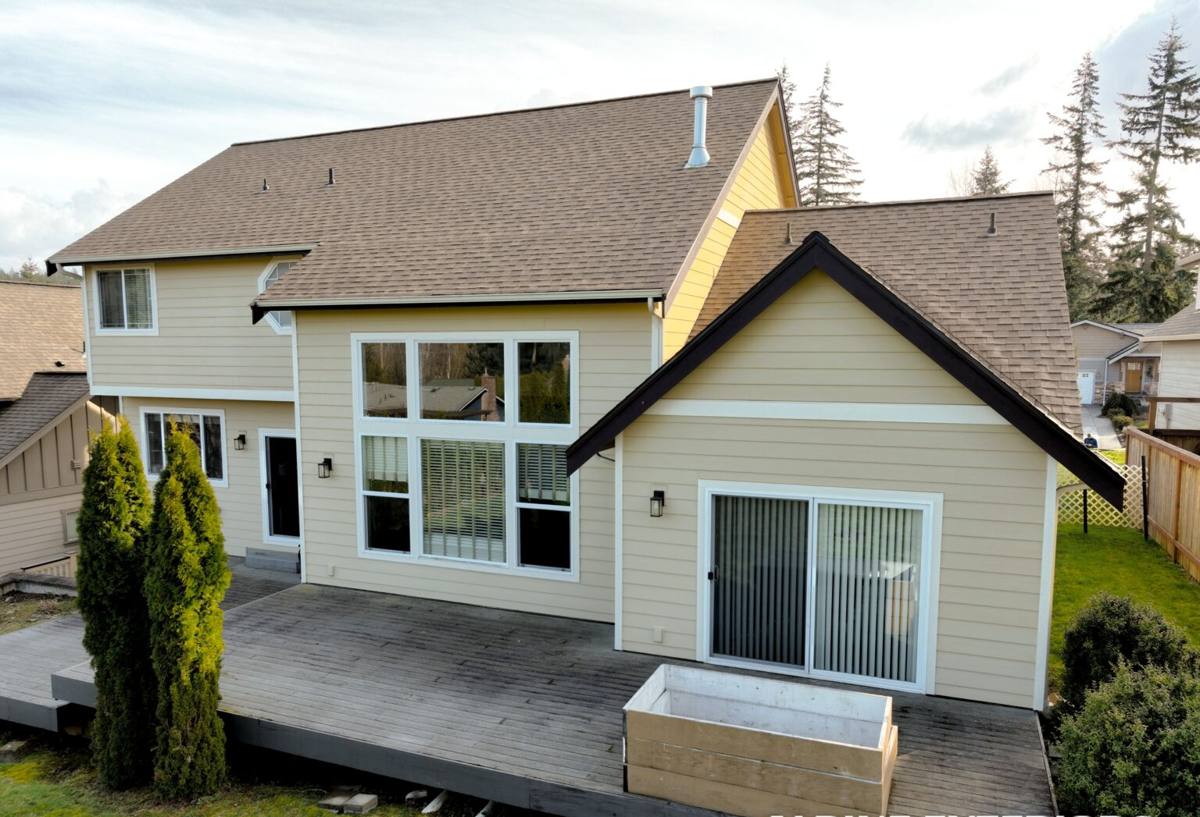
What a Correctly Installed Asphalt Shingle Roof Needs Here
A shingle roof built for Blaine's climate isn't a different product than what's sold anywhere else — it's the same asphalt shingle systems used across the country, installed with attention to the details that matter in a wet, salty, coastal environment. The shingle itself is only one layer of the system. What happens underneath and around it is what actually determines whether the roof performs.
Underlayment and Water Barriers
A synthetic or felt underlayment across the full roof deck is standard, but in this climate we treat the vulnerable areas — eaves, valleys, and any low-slope transitions — as places that need a self-adhered ice-and-water membrane, not just underlayment. Wind-driven rain and the region's occasional freeze-thaw cycles both concentrate stress at these spots.
Flashing That Accounts for Salt Exposure
Flashing around chimneys, skylights, walls, and roof-to-wall intersections should be corrosion-resistant material appropriate for coastal exposure, properly lapped with the underlayment and shingle courses so water is always directed down and out, never trapped. Cutting corners on flashing is the single most common cause of the "mystery leak" homeowners deal with years after a roof was installed.
Fastening Pattern and Wind Exposure
Blaine's open exposure to bay and strait winds means nailing pattern and fastener count matter more here than they would on a sheltered inland lot. Manufacturer specifications for high-wind installation exist for a reason, and skipping them to save time is one of the more common shortcuts that shows up later as lifted or missing shingles after a storm.
Choosing the Right Asphalt Shingle for a Blaine Home
Not every asphalt shingle product is built the same way, and the right choice depends on your roof's exposure, slope, and how much shade and moss pressure it deals with. Here's how the common options compare for a coastal Whatcom County home:
| Shingle Type | Typical Lifespan | Best For | Trade-Offs in This Climate |
|---|---|---|---|
| 3-Tab Asphalt | 15-20 years | Budget-conscious re-roofs, simple roof lines | Lower wind rating and less algae resistance unless upgraded; shows moss staining sooner |
| Architectural/Laminate | 25-30+ years | Most Blaine homes, especially shaded or exposed lots | Higher upfront cost, but better wind rating and thicker profile handles driving rain better |
| Algae-Resistant (AR) Shingles | Same as base product | North-facing slopes, tree-covered lots, homes near the water | Copper or zinc granules resist algae/moss growth longer, but don't eliminate the need for maintenance |
| Impact-Rated (Class 4) | Same as base product, often longer manufacturer warranty | Homes wanting maximum durability and possible insurance credit | Higher material cost; check with your insurer on any premium discount before assuming savings |
For most Blaine homes we lean toward a laminate/architectural shingle with algae-resistant granules as the practical baseline — the upfront difference over basic 3-tab is modest compared to the added years and reduced moss maintenance over the life of the roof.
Our Installation Process
The process itself isn't exotic, but the order of operations and attention to detail is where a roof either holds up to this climate or doesn't.
- Inspection and tear-off assessment — we check the existing deck condition, look for hidden rot or moisture damage (common where moss has been sitting on old shingles), and confirm ventilation is adequate before quoting the job.
- Deck repair — any soft, rotted, or delaminated sheathing gets replaced before anything new goes down. Roofing over a compromised deck just hides the problem.
- Underlayment and water barrier installation — full synthetic underlayment plus ice-and-water membrane at eaves, valleys, and other vulnerable transitions.
- Flashing — new flashing at all penetrations, walls, and valleys rather than reusing old flashing, which is often corroded or bent from years of salt exposure.
- Shingle installation — installed to manufacturer wind-rating specifications, with attention to nail placement and exposure lines.
- Ventilation check — ridge and soffit ventilation confirmed or corrected so the attic can actually dry out between rain events.
- Final walk-through — cleanup, magnetic nail sweep, and a review of the finished roof with the homeowner.
Ventilation and Moisture Control
An asphalt shingle roof doesn't fail from the top down as often as it fails from moisture trapped underneath. In a climate as consistently wet as this one, attic ventilation is not optional detailing — it's part of what keeps the shingles themselves performing and keeps moisture from condensing on the underside of the deck.
Balanced intake (soffit vents) and exhaust (ridge vent or equivalent) let warm, moist air escape rather than sitting against the roof deck. Poor ventilation shows up as premature shingle curling, granule loss, and in worse cases, sheathing rot that isn't visible until a repair or re-roof uncovers it. If your attic feels noticeably warm and humid in summer or you see frost on nail tips in winter, that's usually a ventilation imbalance worth addressing before it's a roofing bill.
Living With Moss Season: What Actually Helps
Moss is a maintenance issue, not usually an installation defect, but the roof's design can make the fight easier or harder. A few things make a real difference for Blaine homes:
- Zinc or copper strips installed near the ridge let rain carry metal ions down the roof, which suppresses moss regrowth over time
- Algae-resistant shingles slow growth on new roofs, especially on shaded or north-facing planes
- Keeping overhanging branches trimmed back reduces both shade and the leaf/needle debris that holds moisture against the shingles
- Gentle, low-pressure moss removal (never pressure washing, which strips granules) done before moss gets thick and rooted
- Clean gutters and downspouts so water actually leaves the roof instead of backing up under the shingle edge
- Annual or twice-yearly inspection of valleys and flashing, where debris and moss collect fastest
None of this eliminates moss entirely — it's a fact of life on the Semiahmoo Peninsula — but consistent, light maintenance is far cheaper than letting it sit for years and then dealing with the underlying deck damage.
Signs Your Blaine Roof Needs Repair or Replacement
Because coastal wear happens gradually, a lot of homeowners don't notice a problem until it shows up as an interior leak. Watch for these signs between routine inspections:
| What You Notice | Likely Cause | Urgency |
|---|---|---|
| Granules collecting in gutters | Normal aging, or accelerated wear from moss/algae | Monitor; worth an inspection if heavy |
| Curling or lifted shingle edges | Ventilation issue, aging shingles, or wind damage | Schedule an inspection soon |
| Dark streaking or thick moss mats | Algae/moss growth from moisture retention | Address before next wet season |
| Rust staining around flashing or fasteners | Salt-air corrosion of exposed metal | Have flashing inspected |
| Interior ceiling stains or attic moisture | Active leak, often at flashing or valleys | Urgent — schedule promptly |
Why a Crew That Already Works Blaine Matters
Roofing crews that mostly work drier, inland climates often don't default to the coastal detailing this area needs — the extra ice-and-water coverage, the corrosion-resistant flashing choices, the wind-rated fastening pattern. It's not that the shingle products are different; it's that the installation judgment calls change when a roof sits a few blocks from Semiahmoo Bay instead of inland.
A local crew also knows which parts of a Blaine roof typically take the worst of it — the side that faces prevailing wind and rain, the shaded slope that never quite dries out, the valley that collects debris from nearby trees. That knowledge shapes where we spend extra attention during installation and what we flag during a maintenance inspection, instead of treating every roof the same regardless of exposure.
What Asphalt Shingle Roofing Typically Costs in This Area
Pricing depends on roof size, pitch, existing deck condition, and shingle grade, so any number without an on-site look is a rough guide at best. As a general range, a straightforward tear-off and re-roof with a mid-grade architectural shingle tends to run in the low-to-mid thousands per typical roofing "square" of 100 square feet installed, with steep pitches, multiple layers to remove, or extensive deck repair pushing costs higher. Upgrading to algae-resistant or impact-rated shingles adds a modest premium over base architectural product, which is usually worth it given the moss and wind exposure homes in this area deal with every year.
The most reliable way to get an accurate number is a physical inspection — roof age, deck condition, and current flashing all affect the real cost more than the shingle choice alone.
If you're weighing a repair, a full replacement, or just want a straight answer on what your roof needs before next moss season, we're happy to take a look. Reach out for a free, no-pressure estimate using the form below.